Fintech · Onboarding · Case study
Unity Small Finance Bank
Helping an applicant understand the deposit behind a secured credit card.

- My role
- Product UX owner from onboarding through launch.
- Project scope
- Two card variants, plan selection, consent, verification, rewards and servicing.
- Delivery
- Launched end-to-end secured-card experience.
APPROACH / Fintech · Onboarding
My design process
How I approached the work, from the first question to a concrete design decision.
Clarify the product model
Explain how the fixed deposit backs the card before asking for commitment.
OUTPUTCard–deposit relationshipStructure the choice
Make card variants, rewards and plan-change timing understandable together.
OUTPUTComparison & selection flowSequence consent and verification
Separate product selection, lien and renewal consent, and video KYC.
OUTPUTOnboarding journeyExtend into servicing
Carry the same product rules into rewards and card management through launch.
OUTPUTEnd-to-end experience
One application contains two financial commitments
An applicant wants a card, but the product also places a lien on a fixed deposit. Card benefits are easy to notice first. The effect on the deposit is the information someone needs before agreeing to proceed. I organised the application around the relationship between the two products.
Compare the choices that can actually change
I worked through two card variants and a customisable rewards plan. In the project rules, plan changes were limited to one in three cycles. That timing belongs beside plan selection because it affects the practical cost of choosing a plan that does not suit the customer.
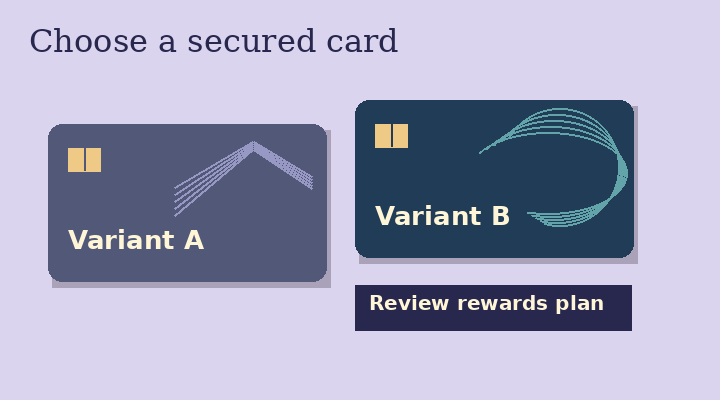
Inspect the product differences. Select the preferred variant. Review the plan for that card.
Explain consent at the point of commitment
The journey brought the deposit lien and auto-renewal into the consent step and connected the application to video KYC. I treated product choice, consent and identity verification as separate decisions. Reaching verification should mean the applicant has already understood what backs the card.
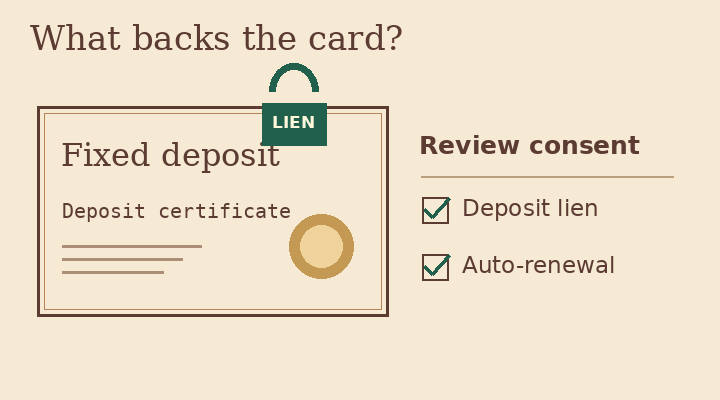
Identify the deposit backing the card. Read both commitments. Confirm before identity verification.
Follow the customer beyond approval
I carried the same product model into rewards and servicing, including how a cardholder understands their current plan. The onboarding journey establishes expectations the servicing experience needs to honour after approval.
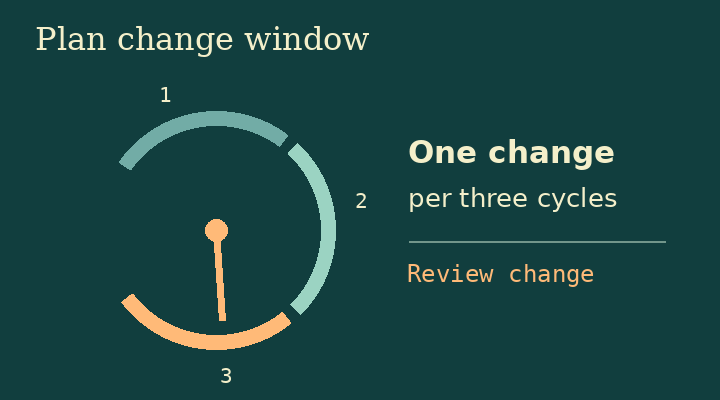
See which plan applies now. Check when a change is available. Confirm the intended plan.
Design decisions
- Variant comparison
- Show the product differences before asking for a selection.
- Consent
- Explain the relationship between the lien, renewal and the deposit.
- Servicing
- Keep the current plan and change interval understandable.
Outcome
I owned the secured credit card experience through launch across onboarding, identity verification, rewards and servicing. The launch is the documented outcome.
What I would measure next
To evaluate comprehension, ask applicants to explain what secures their card and when they can next change their plan.